We are going on a dérive. The oyster-lamps of Bordeaux are glowing pink and silver-green over the quais. Beneath my feet the Garonne races quietly inland, massive and mud-coloured, folding creamily around the piers and then away to join the black nimbus of sky. It is late, but the pont de pierre is still busy with couples heading into town. Some talk animatedly and stride with purpose towards their goal; others are taut, more alert to your gaze, half-expectant. Restless and a little dizzy in the heat, I hope to lose myself under the trees of la rive droite. At Place Stalingrad a young man eases insolently past, his headphones ostentatiously proportioned, incongruous against delicate waves of hair, the soft skin around his jaw. They seem by turns terribly secure and terribly vulnerable, these headphone-wearers, cocooned in a stream of sound. They have replaced their journey with a diversion, with better prospects, with self-improvement, piped straight into their ears. I have the surreal impression that I have been replaced too. Filtered out. I do not really exist. I am become a kind of wallpaper.
People are more or less unique depending on how you scrutinize them. If you examine someone closely, talk to them a little, they may well appear singular in character or appearance. But should you choose a coarser filter – just their gross daily perambulations – they become shallower, more uniform and predictable, less important. Like in physics, where different mathematical models are needed to capture the behaviour of systems at different spatial or temporal scales, so human interactions can be treated at different levels of complexity. With the correct choice of perceptual filter, a human being can be extruded into a set of speeds and oscillations. When I arrive at a hotel in a new city, believing myself free, I am quickly ensnared by the local geography. My movements become more predictable, determined by the shortest distance to the local metro station or grocery store. From above, I can be seen running through grooves in the city architecture – channels of low potential. Perhaps you cannot predict exactly where I will be moment-to-moment, but you might start to build a statistical picture, even use this picture to manipulate me.
Our conscious awareness has natural frequency filters, just as our eyes are only sensitive to a certain range of electromagnetic frequencies. Walking through the countryside, my attention tends to rest at small and medium scales. I notice birds, certain insects, cloud formations. I have a dim awareness of plants and trees… Bird calls may transport me further afield, but my knowledge of geology is poor and the wider context is often overlooked. A geographer or local historian would have the intellectual tools to interpret features in the landscape which are physically larger or vary more slowly. They could point to links between stone and soil characteristics, associate the shape of hills with our industrial past (e.g. chalk pits or old lime kilns). They could probably assimilate things that I would not even see.
I remember watching a family wandering around Ashdown forest shortly after the pandemic. The sky was grey and lachrymose. Rain came reluctantly and vertically from a luminous belly of stratus. There were Dartford warblers in gorse on the other side of the valley and goldcrests down by the river. The family passed in front of me, chatting and laughing in a loose train – all except one of the daughters, who was absorbed in her mobile phone. She followed in the wake of her elder relations and would only look up for the briefest moment to avoid walking into something or to take a photo of the scenery. Her surroundings were always perceived via a screen, like a Chinese teen in the National Portrait Gallery. There is the same three-second choreography: a half-second to register the scene, the phone is raised as intermediary, the camera is engaged, a photo taken – and already her back is turned and she is walking away…! Head lowered and ears insulated from unforeseen distractions. Even liberated from the smartphone, I wonder how much this girl would have been able to extract from her countryside experience? Her parents probably hadn’t given her the tools to take anything except the minimum of wonder allotted to all human beings when faced with the superhuman and the beautiful. No one’s fault, as such. Just unfortunate.
On the other hand, teenagers are famously difficult to impress and our interests evolve as we age. Even now I might arrive in a multi-storey hotel and explore nothing except the route from my apartment to the common room and the exit. I am happy to exist like this for weeks at a time, but I have friends whose restless curiosity drives them to examine the full corridor and all the floors. They will know the floor plan, the plumbing, the history of the experimental nuclear facility next door and the times the wild dogs are most active in the evening. The security guards, the ladies who prepare our meals, the national spirit and national spirits are all swiftly and ruthlessly incorporated into their vision of the world. These friends of mine – these people of exceptional capacity – they are hard to tie down. Sometimes I liken them to angels, speaking in a language that can only be approximated, appearing briefly on the road, ministering, advising, then off again on their own private crusade, leaving behind them gifts of fading embers that we cannot read. I wonder if an officer in Napoleon’s army might have reflected similarly on how a military campaign can be mobilized by the will of one man, the force of character required, but also, perhaps, the complicity of others around them and eventually the formation of a personality separate from the man himself.
Standing (as I once did) in the lobby of Henri-Coandă airport, every muscle scolding, head fugged with sleeplessness and the soot of small-time aspirations, a sense of elation dawned that I was about to return to France, but also that perhaps no great things can be achieved without serious struggle – and perhaps I have to make a choice between the uncomfortable and the comfortable. When you work with these men and women of great internal stature, you can feel the rules creaking – they apply pressure at the edges of our small certainties to make space for their ideas.
Another headphone-wearing Frenchman angles past, eyes averted. How do I appear to these people? Am I a shade flickering at the edge of their awareness? What about in England, in Morlock-land, where public spaces are tightly packed and there is meagre, perfunctory support for local government – would these EarPod introverts see the potholes, the cracked bus shelters? Would they interpret these things as an economic necessity? Would they really feel the deprivation?
The headphone-wearing pedestrian deliberately rejects reality in favour of entertainment – usually a podcast or musical stimulus – that is divorced from the process of travel. In these moments they are no longer citizens in the same way – they exist separately from their immediate surroundings and join the mediaverse. They become, perhaps, an element in the great global smoothing of ideas – the force that levels traditions, particularity, and cultural asperities – embracing a monoscape of cafés serving coffee in the same aseptic surroundings, with Tolix chairs, crass tattoos and tumbling tropical houseplants.
Self-indulgent cynicism, you say? Armchair sophistry? Perhaps so. Clearly headphones help you to learn on the move or enjoy a musical digression, they can save you from rampant advertisements and the speechless drudgery of the daily commute, but if the action of covering your ears becomes ingrained then you have already started to fall off the world, to lose your grip on the parquet floor. The inveterate headphone-wearer renounces their citizenship because they choose not to engage with their environment and the people in it. It is the first duty of a citizen to notice. Looking at the appalling reality of the dilapidated station platform and then savouring your discomfort without artificial distraction or aural analgesic is an essential ingredient of political engagement. People rarely act to right a wrong unless they are personally wounded. Let the boredom mellow. Stop reading about what other people think. You will find that your own thoughts rise like vapour into the vacuum. Specious justifications for selling off public spaces, citing “unprecedented” economic challenges, will cease to be convincing. Your curiosity will engage, and you will lock into the running flywheel of experience. You may catch the arrival of the first swifts in April and marvel how their screams are thrown sideways by the sonic envelope of an approaching tram; a confusion of whooping, strangled cries may lead you to a hidden corridor of greenery between terraced houses, where a sparrowhawk beats its wings in a tumult of gulls and jackdaws.
I remember passing through Paris on New Year’s Day, when I decided to try to walk around without consulting my smartphone. Suddenly my long list of objectives shrank to just one: locating the Seine (from which point I knew I could find my way around). The day was overcast, so my eyes keyed into small details like the shape of trees, the flow of pedestrians and traffic – anything that might help me orient myself as I groped slowly southwards. I took eccentric side streets and was kindly advised by an old lady in a shop that sold chocolate Florentines. I spoke to the Florentine-seller himself, who quietly suggested I ignore the old lady and continue on my original bearing. Not knowing where I would end up, I took the time to scrutinize the graffiti I passed, the façades. I started to build a mental map of major roads. I gave myself up to serendipity and accepted that I might have to settle for a restaurant that was there rather than a restaurant that was good value or well-regarded. There was no “wow” fatigue, such as you get when wandering around certain national monuments, where five Egyptian sarcophagi may be ranged side by side, succeeded closely by a hundred Greek and Roman statues. I absorbed impressions slowly. They were digested. If we take a more playful attitude towards exploration, maybe we can avoid an over-concentration of footfall in popular places – achieve a temporal and spatial smoothing of flux.
Similar to the way the urban fox has physically diverged from its rural cousins, humans that live in big cities are forced to adapt to new “survival” pressures. Our intelligence has made us more flexible than foxes, so the shape of our skulls remains the same regardless of where we live. It is rather the shape of our minds that changes. Where a countryman might be free to let their awareness roam unchecked over sights, sounds and new acquaintances, city dwellers must resist a thousand daily attacks on their attention. Even walking under trees on la rive droite of Bordeaux, finding the tranquillity to form three contiguous sentences as part of my internal monologue is difficult. I tread over lights – absurdly bright – recessed into the ground. Like the arboreal moths which will find it impossible to traverse without becoming disoriented, so my thoughts are interrupted repeatedly by the intensity of the light. The frequency at which the lights have been placed become superimposed on the frequency of my thoughts. Poor urban design is a violence against the mind of the individual. Ugly buildings should not be tolerated any more than buildings that pollute.
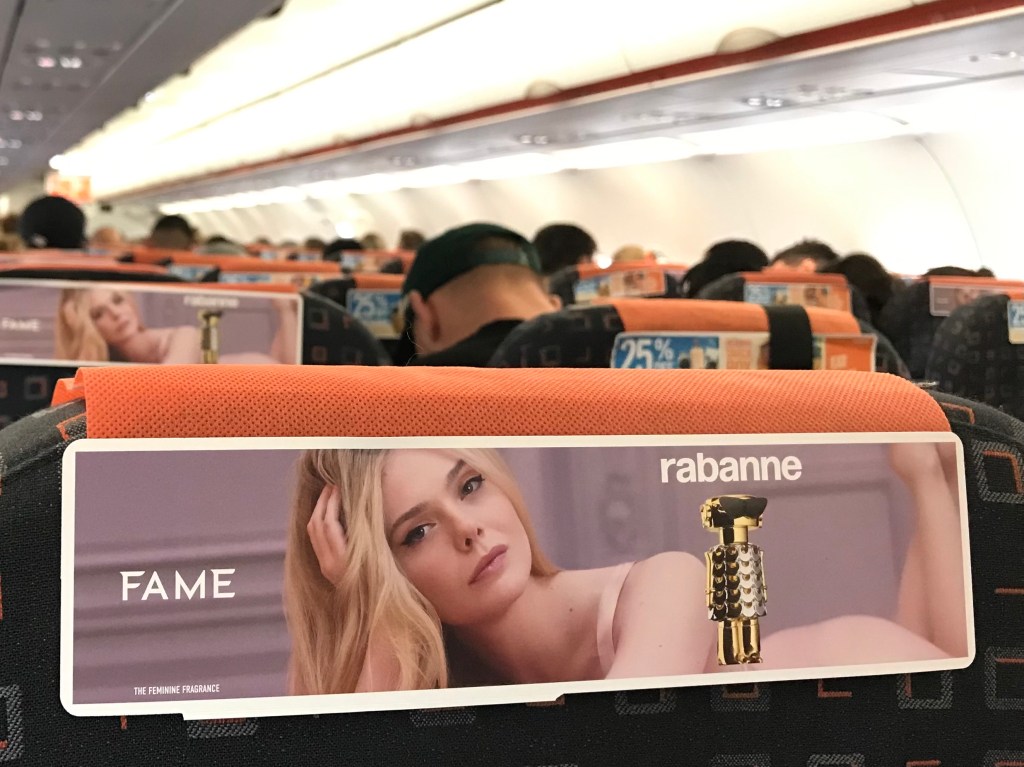
Why do we allow our attention to be exploited in public places? Compare the metro systems in Prague and London: in Prague, the platforms are completely free of advertisements, the walls are generally uncluttered and you can leave the metro almost as refreshed as you entered it; in London, however, every square inch of the metro has been sold off for product placement. Travelling down the escalator portals, walking to the platforms, waiting for a train, seated inside the carriages – at every stage there are billboards selling sex, supplements and fast fashion which drag terribly at our attention. This visual bombardment is made worse by noise – produced by the roughness of train wheels and track – which can exceed 100dB on some lines. The psychic friction born out of these audiovisual distractions is converted into brain fug and a reluctance to engage with our surroundings. We would not tolerate an audible beep or periodic electric shock designed (yes, designed) to annihilate our train of thought – so why advertisements?

 Philip Bradford